ICE at the Checkpoint? Why It’s Time to Revisit Private Airport Security
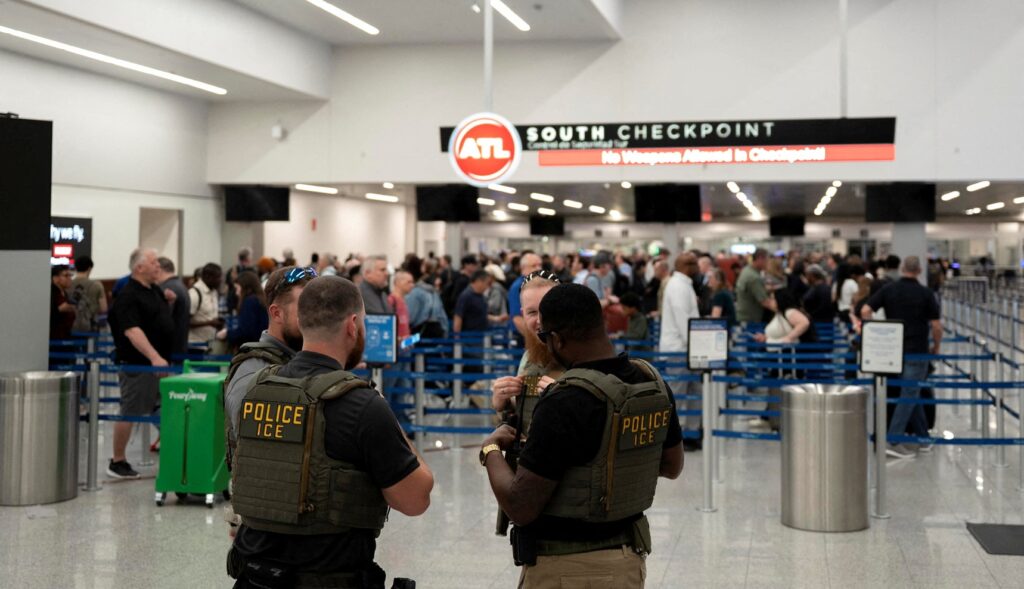
The ongoing DHS shutdown has officially reached a “boiling point” for American travelers. Between massive lines at major hubs and the brief, confusing suspension of Global Entry, the federal government is now pulling an unprecedented lever: Deploying ICE agents to help staff airports.
While the move is intended to shorten three-hour wait times, it has reignited a fierce debate: Is it time to finally move away from the TSA model and toward private security?
The Current Chaos: ICE Steps In
Over the weekend, “Border Czar” Tom Homan confirmed on CNN that ICE agents will be deployed to airports starting today. According to Homan, the plan is to use these agents for “logistical roles” to free up certified TSA officers for actual screening.
- The Roles: ICE agents will likely monitor exit lanes and secured-side perimeters.
- The Priority: Airports with the longest delays (some currently exceeding 180 minutes) will see help first.
However, the American Federation of Government Employees (AFGE) isn’t buying it. Union President Everett Kelley issued a scathing response, noting that TSA officers spend months training to detect specific threats like explosives—skills you simply “cannot improvise.”
“Putting untrained personnel at security checkpoints does not fill a gap. It creates one.” — Everett Kelley, AFGE President
The “Political Football” of Trusted Traveler Programs
Points and miles enthusiasts were particularly rattled when the administration briefly paused Global Entry and TSA PreCheck last month. While PreCheck was quickly reinstated after it became clear the move was causing more harm than good, the message was sent: your expedited travel status is a tool for political leverage.
Ironically, these programs are designed to reduce the staffing burden on the TSA. Suspending them during a staffing crisis is like closing lanes on a bridge because there aren’t enough toll collectors—it only makes the gridlock worse.
The Case for Privatization: The SPP Model
The current crisis highlights the inherent flaw in a government-run security monopoly: when the budget stalls, the system breaks. But many travelers don’t realize that a private alternative already exists under the Screening Partnership Program (SPP).
Currently, over 20 U.S. airports (including San Francisco and Kansas City) use private security contractors that follow TSA standards but are managed by the airport authority.
| Feature | TSA (Federal) | Private (SPP Model) |
| Funding Source | Congressional Budget | Federal Contract (more stable during shutdowns) |
| Staffing Flexibility | Rigid federal hiring | Faster, local hiring & scaling |
| Accountability | Government agency | Performance-based contracts |
| Innovation | Often slow to adopt | Competitive pressure to be efficient |
The Explorer’s Take
If airports were managed by private security firms, a federal budget impasse wouldn’t necessarily mean “sick-outs” and three-hour lines. Private firms have a contractual obligation to maintain staffing levels, regardless of what’s happening on Capitol Hill.
For those of us who live for the next flight, the current “solution”—using ICE agents to guard exits while TSA officers work without pay—feels like a band-aid on a broken system.