The Incredible Shrinking Flight: How Airlines Cut Every Ounce to Save Billions
When you settle into your (increasingly narrow) airplane seat, you might notice the lack of legroom or the disappearing snacks. But behind the scenes, airlines are playing a high-stakes game of “The Price is Light.”
In an industry where a single plane can burn a gallon of fuel every second, weight isn’t just a number—it’s the difference between profit and loss. From olives to iPads, here is the strange, surprising, and sometimes cheeky ways airlines are trimming the fat.
The “Olive” That Started It All
The legend of airline cost-cutting began in the 1980s when American Airlines realized that by removing just one olive from every salad in First Class, they could save $40,000 a year. It wasn’t just the cost of the olives; it was the cumulative weight across thousands of flights.
Today, that philosophy has evolved into a science. Airlines have moved past salads and are now looking at the very bolts holding the plane together.
1. The Digital Flight Bag
Remember those massive black cases pilots used to lug around? They were filled with up to 80 pounds of paper manuals and navigation charts. Today, those have been replaced by electronic tablets (iPads). By ditching the paper, airlines save between 35 to 80 pounds per flight. Across a massive fleet, that’s millions of dollars in fuel saved annually.
2. Slimming Down the “Hardware”
Modern airplane cabins are lighter than ever, though your back might disagree.
- Slimline Seats: Newer seats use thinner materials and less padding. They are lighter to carry and allow airlines to cram in more rows.
- Lightweight Galleys: Many airlines have swapped heavy convection ovens for lighter storage units, especially since full meals are becoming a thing of the past.
- The Paperless Pocket: You’ve likely noticed the “SkyMall” catalogs and thick magazines have vanished. Removing that paper weight from every seat pocket saves a fortune in fuel and printing costs.
3. The “Pre-Order” Strategy
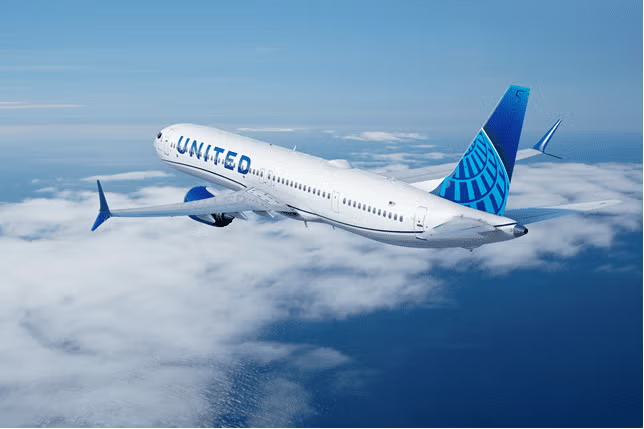
United Airlines now encourages passengers to order snacks before they even arrive at the airport. While it feels like one more chore for the traveler, it’s a genius weight-saving hack. If the airline knows exactly how many snack boxes are needed, they don’t have to carry “just in case” inventory. Less “just in case” weight = less fuel burned.
4. Engineering the Small Stuff
It’s not just the big items; it’s the microscopic adjustments:
- Lighter Glassware: Qantas redesigned its plates, cutlery, and glassware to be 11% lighter for long-haul flights.
- Thin-Sliced Limes: Delta famously saved $500,000 a year by slicing their limes into 16 pieces instead of 10. Fewer limes per flight means less weight.
- Less Water: Many airlines now carry less water in their tanks for faucets and toilets. For every 25 pounds of water removed, an airline can save roughly $500,000 a year.
5. The Weird and Controversial
Some weight-saving attempts have been… creative, to say the least.
- The Bathroom Plea: In 2009, All Nippon Airways (ANA) asked passengers to use the restroom before boarding to decrease the weight on the plane. The trial lasted only a month.
- Pay-by-Weight: Samoa Airways introduced a policy where fares were calculated based on the combined weight of the passenger and their luggage.
- Ditching the Vest: Air Canada received permission to remove heavy life vests on certain flights that stay within 50 miles of the shore, replacing them with lighter flotation devices.
The Bottom Line
Whether it’s charging you for a heavy suitcase or swapping out heavy beer cans for lighter options, airlines are obsessed with weight. The next time you feel like your seat is a little thinner or your drink is missing an extra lime wedge, just remember: it’s all in the name of the “eFlight” and a healthier bottom line.